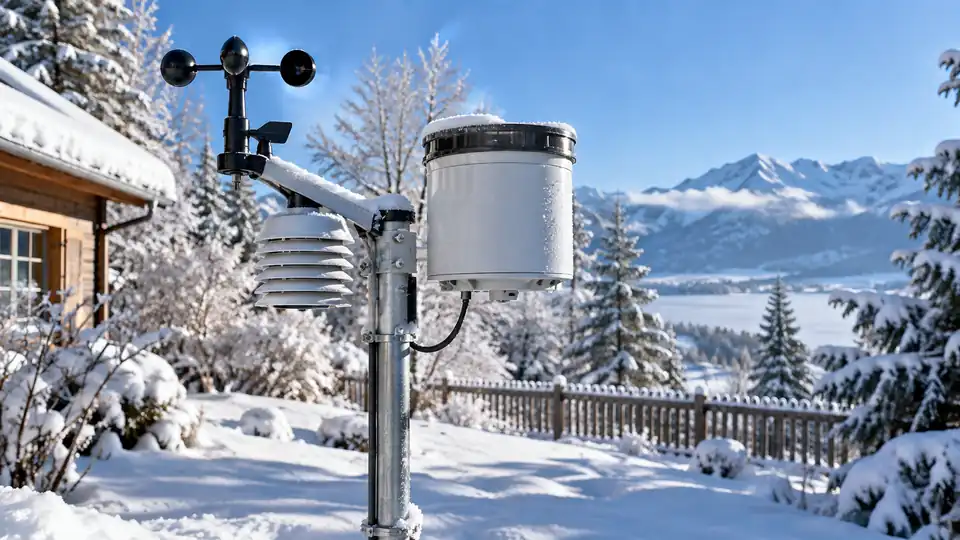
Cold weather exposes the gaps in a basic indoor/outdoor thermometer. A sharp overnight freeze, a snow-covered rain gauge, weak batteries, and a sensor mounted beside a warm wall can all make a weather station less useful when conditions turn harsh. The strongest choices for this category measure more than temperature, offer sensible sensor placement, and provide a practical way to check conditions from inside the house.
The product information supplied for these stations does not consistently list outdoor operating-temperature limits, so none should be treated as proven for temperatures below an unstated range. That matters in a cabin, garden, greenhouse, or exposed rural property. Also, wireless sensor communication is different from Wi-Fi. A local console can receive readings without offering remote access, while a connected model may let you view data away from home. Rainfall measurement deserves special care too, since frozen precipitation may not be recorded the same way as liquid rain.
This comparison gives the most weight to complete weather monitoring, cold-season usefulness, power requirements, rainfall and wind data, sensor architecture, and access to readings. The Ambient Weather WS-2902 leads for connected, full-featured monitoring, while the WS-2000 is the more advanced premium alternative. Simpler AcuRite, Newentor, DreamSky, and Fokey models make more sense for readers who mainly need temperature and humidity at a lower level of complexity.
Quick Answer
- Best Overall: Ambient Weather WS-2902 combines temperature, humidity, wind, rainfall, UV, solar radiation, Wi-Fi, remote access, and smart-home support.
- Best Premium Option: Ambient Weather WS-2000 adds a broad integrated sensor array, calibration support, and Wi-Fi connectivity.
- Best for Rainfall Records: Sainlogic 12-in-1 records hourly, daily, weekly, monthly, and cumulative rainfall while also tracking wind.
- Best for Simple Remote Temperature Monitoring: Smart WiFi Weather Station sends temperature and humidity readings to the Tuya app when plugged in and connected to 2.4GHz Wi-Fi.
Best Weather Stations for Cold Weather Comparison Table
| Product | Measurements | Connectivity | Sensor Design | Best For |
|---|---|---|---|---|
| Ambient Weather WS-2902 | Temperature, humidity, wind, rain, UV, solar radiation | Wireless, Wi-Fi, app, smart-home support | Integrated outdoor array | Connected cold-weather monitoring |
| Ambient Weather WS-2000 | Temperature, humidity, wind, rain, UV, solar radiation | Wireless, Wi-Fi | Integrated outdoor array | Premium local and network data |
| Sainlogic 12-in-1 | Temperature, humidity, pressure, wind, rain, dew point, feels-like | Wireless, no Wi-Fi | Outdoor sensor array | Rainfall history without cloud access |
| AcuRite Iris 5-in-1 | Temperature, humidity, wind, rain, pressure | Wireless, Wi-Fi, Weather Underground | 5-in-1 outdoor array | Weather-network uploads |
| AcuRite Iris 01512MCB | Temperature, humidity, wind, rain, pressure | Wireless local console | Outdoor sensor with mounting bracket | Detailed local history |
| Smart WiFi Weather Station | Temperature, humidity, weather forecast | 2.4GHz Wi-Fi, Tuya app | Up to 3 sensors, one included | Remote temperature and humidity |
| Newentor Weather Station | Temperature, humidity, pressure, forecast | Wireless local console | Up to 3 sensors, one included | Simple home monitoring |
| DreamSky Weather Station | Temperature, humidity, pressure, forecast | Wireless local console | Up to 3 sensors, one included | Large display and alerts |
| Fokey Weather Station | Temperature, humidity, pressure, forecast | Wireless local console | Up to 3 sensors, one included | Readable remote sensor |
The detailed reviews explain which stations offer meaningful cold-season advantages and which are better suited to simple indoor/outdoor readings.
1. Ambient Weather WS-2902: Best Overall
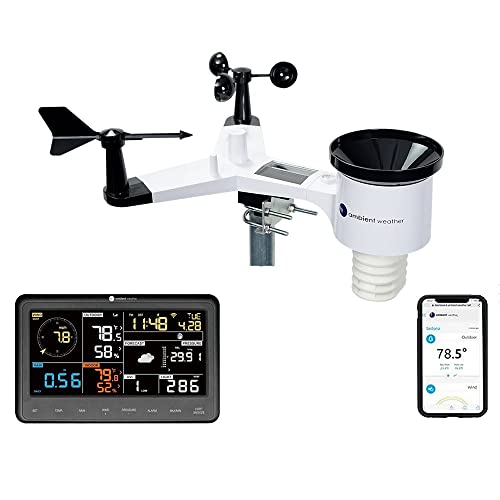
For a property where winter conditions need more than a glance at an outdoor thermometer, the WS-2902 has the most useful measurement mix in this group. Its outdoor array measures temperature, humidity, wind speed, wind direction, rainfall, UV intensity, and solar radiation, while the color display keeps local readings visible indoors. That combination is useful during a cold snap, when wind and rainfall can tell a very different story from the thermometer alone.
Its Wi-Fi connection gives this model a major practical advantage. The listing describes remote access, alerts, Ambient Weather Network connectivity, and support for IFTTT, Google Home, and Alexa. That means the station can serve a home, workshop, or property where someone wants to check conditions without walking to the console. The product information does not provide a cold-weather operating range, so placement, battery maintenance, and the handling of frozen precipitation still require attention.
Pros
- Measures temperature, humidity, wind, rainfall, UV, and solar radiation.
- Supports Wi-Fi-based remote access and weather-network sharing.
- Listing identifies IFTTT, Google Home, and Alexa compatibility.
- Includes a color display and integrated outdoor sensor array.
- Useful for tracking more than temperature during winter storms.
Cons
- The supplied information does not specify the outdoor operating-temperature range.
- Integrated arrays require a suitable outdoor mounting location and may be less flexible than separate sensors.
This is the strongest fit for a connected home, cabin, or larger property where rainfall, wind, and remote alerts matter. Readers who only want a basic freezing-temperature warning will pay for capabilities they may never use, while those who want meaningful local weather data will find the broader sensor set easier to justify. Treat the listed connectivity as a major benefit, but verify current setup requirements before ordering.
To buy this product, click here.
2. Ambient Weather WS-2000: Best Premium Option
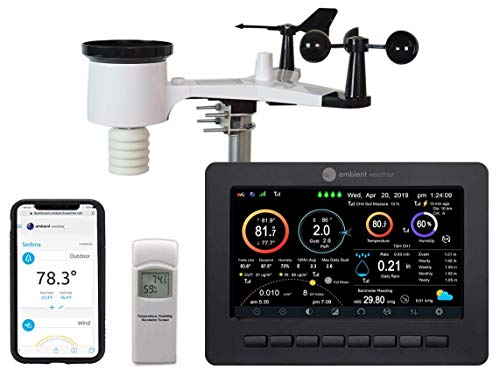
The WS-2000 is built around a broad all-in-one sensor array that measures wind speed, wind direction, temperature, humidity, rainfall, UV, and solar radiation. Its TFT color display offers a more information-rich local view than a basic thermometer console, which can be handy beside a back door on a frosty morning. Imperial and metric units are supported, and calibration is identified in the product information.
Wi-Fi provides a path to networked weather data, although the listing describes that connection as an option for transmitting information to a personal weather-station network. The console uses a 5V DC adapter, while the sensor array requires three AAA batteries. That distinction matters in cold weather because the outdoor sensor’s battery compartment becomes part of seasonal maintenance. No operating-temperature specification is supplied, so this station should not be treated as automatically suitable for temperatures outside its documented range.
Pros
- Measures wind, temperature, humidity, rainfall, UV, and solar radiation.
- Supports both imperial and metric measurement units.
- Includes a TFT color display for local monitoring.
- Offers Wi-Fi connectivity for network transmission.
- Calibration support gives users more control over displayed data.
Cons
- Console power requires the included 5V DC adapter.
- The outdoor sensor array requires three AAA batteries, and no cold-weather operating range is listed.
This is a sensible premium choice for someone who wants a full sensor array and a capable color console without settling for temperature and humidity alone. It ranks behind the WS-2902 because the supplied information describes fewer specific connected-home functions. Choose it for broad local measurements and calibration support, but check network features and winter battery expectations before purchase.
To buy this product, click here.
3. Sainlogic 12-in-1: Best for Rainfall History
Winter monitoring often means keeping an eye on more than the overnight low. The Sainlogic 12-in-1 records rainfall by hour, day, week, month, and cumulative total, making it the most useful pick here for readers who want a running precipitation record on a local console. It also measures wind speed and direction, barometric pressure, dew point, and feels-like temperature, giving cold mornings more context than a lone temperature reading.
The listing gives temperature accuracy as plus or minus 0.2 degrees Celsius, humidity accuracy as plus or minus 1.8 percent RH, and rainfall accuracy as plus or minus 7 percent. Those are listing claims, not independent verification, but they provide more detail than most of the simpler stations here. Wireless transmission is listed up to 443 feet in open, unobstructed conditions. This station has no Wi-Fi, so the data remains tied to the local display rather than remote access.
Pros
- Tracks hourly, daily, weekly, monthly, and cumulative rainfall.
- Measures wind speed, wind direction, pressure, dew point, and feels-like temperature.
- Listing provides temperature, humidity, and rainfall accuracy claims.
- Advertised wireless transmission reaches up to 443 feet in open conditions.
- Includes mounting hardware and a 6.5-inch color display.
Cons
- No Wi-Fi or remote app access is identified.
- Frozen precipitation may not be represented the same way as liquid rainfall.
This station fits a garden, farm, or home where rainfall records and wind readings matter but cloud access does not. The lack of Wi-Fi is a genuine limitation for a remote cabin, yet it also keeps the system focused on local monitoring. Place the rain sensor carefully and do not assume the published open-air transmission distance will pass unchanged through walls, metal, or multiple floors.
To buy this product, click here.
4. AcuRite Iris 5-in-1: Best for Weather Network Uploads
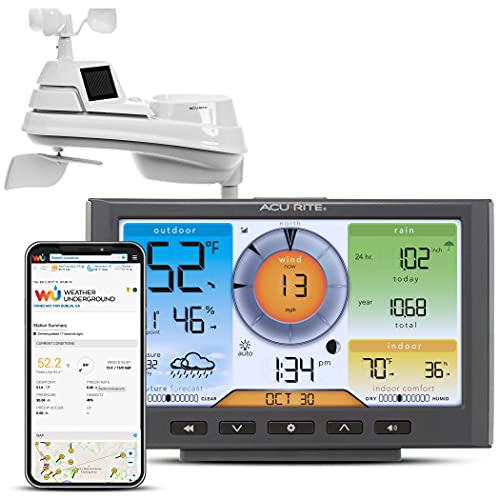
The AcuRite Iris 5-in-1 gives winter monitoring a clear network angle. Its outdoor system measures temperature, humidity, wind speed, wind direction, and rainfall, while the indoor display also reports barometric pressure. The listing identifies Weather Underground connectivity, remote monitoring, historical data, threshold alarms, heat index, dew point, wind chill, and enhanced rainfall history. For someone checking a property from a phone or contributing observations to a weather network, those functions matter more than an oversized local screen.
The 5-in-1 label should not be compared as though it were a universal industry standard. Here, the listed sensor functions are the useful detail. Wind and rainfall can add valuable winter context, but the supplied information does not provide a sensor operating range or explain how the rain gauge handles snow and ice. A proper outdoor location remains important, and Wi-Fi capability should not be confused with guaranteed service performance.
Pros
- Includes temperature, humidity, wind speed, wind direction, and rainfall sensing.
- Supports Weather Underground for remote monitoring and data sharing.
- Provides historical data, threshold alarms, dew point, and wind chill.
- Includes a color LCD display with adjustable dimmer.
- Combines an anemometer, wind vane, rain gauge, barometer, hygrometer, and thermometer.
Cons
- The supplied information does not specify the outdoor operating-temperature range.
- Snow and frozen precipitation handling is not identified.
This model makes sense for a reader who wants local measurements plus a named weather-network connection. It is a stronger choice than a local-only console for remote checks, but it may be unnecessary for a bedroom or small apartment where temperature and humidity are the main concerns. Confirm the current Weather Underground setup details and mounting requirements before ordering.
To buy this product, click here.
5. AcuRite Iris 01512MCB: Best for Detailed Local Data
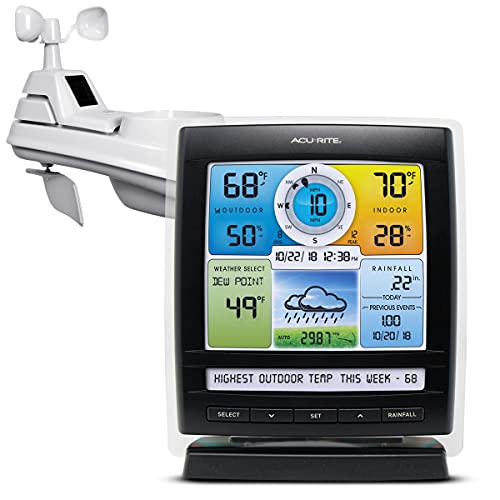
The 01512MCB is a local-display alternative for readers who want a richer set of observations without choosing the Wi-Fi model. The listing describes more than 55 data points, including indoor and outdoor temperature and humidity, wind speed and direction, rainfall, pressure trends, historical information, heat index, dew point, and feels-like temperature. That makes the console useful for watching how a cold front develops across the day.
Setup is described as installing batteries and attaching the outdoor sensor to a pole or post with the included mounting bracket. That is a straightforward arrangement, although the sensor location still affects readings. The station provides a personalized 12-hour forecast based on elevation and barometric pressure. It does not have the supplied Wi-Fi or weather-network features of the 01540M, and no outdoor operating range is listed.
Pros
- Lists more than 55 data points and historical weather information.
- Measures temperature, humidity, wind, rainfall, and barometric pressure.
- Includes an outdoor mounting bracket.
- Provides heat index, dew point, feels-like temperature, and pressure trends.
- Uses a color display with adjustable dimmer.
Cons
- Remote Wi-Fi monitoring and Weather Underground support are not identified.
- The supplied product information does not specify cold-weather operating limits.
Choose this station when local information density matters more than checking conditions from elsewhere. It offers more measurement context than a basic indoor/outdoor thermometer, while avoiding the additional network emphasis of the Wi-Fi version. A remote property that needs phone access should move up to a connected model instead.
To buy this product, click here.
6. Smart WiFi Weather Station: Best for Simple Remote Temperature Monitoring

Cold-weather monitoring does not always require wind cups, a rain gauge, and solar radiation data. In a basement, nursery, greenhouse, or vacation property, temperature and humidity may be the immediate concern. This station sends those readings to a phone through the Tuya app, supports historical trends and high/low alerts, and forecasts five days on the main screen according to the listing.
There is an important power detail. Wi-Fi and app features require the station to be plugged into a power adapter, while battery operation provides basic weather data without those connected functions. It supports up to three sensors, but only one is included. The product information identifies 2.4GHz Wi-Fi and four screen brightness levels, yet it does not list wind or rainfall measurement. That makes it a focused environmental monitor rather than a full outdoor weather station.
Pros
- Provides remote temperature and humidity readings through the Tuya app.
- Supports historical trends, custom alarms, and high/low alerts.
- Accepts up to three sensors, with one included.
- Offers a five-day forecast display and four brightness levels.
- Includes a USB port and two power modes.
Cons
- Wi-Fi and app functions require plugged-in operation.
- It does not list wind or rainfall measurement.
This is a practical choice for monitoring indoor or nearby sensor locations from a phone, especially where a freeze alert matters more than full meteorological coverage. It is a poor match for someone who needs snowfall-related precipitation records or wind exposure data. Keep the power requirement in mind before placing it in an area where an outlet is unavailable.
To buy this product, click here.
7. Newentor Weather Station: Best Simple Home Display

The Newentor keeps the cold-weather question straightforward: what is the temperature and humidity inside, what is it outside, and are conditions changing? Its color LCD reports indoor and outdoor readings, daily highs and lows, alerts, barometric pressure, moon phase, time, and a forecast. The included sensor communicates wirelessly, while the main unit can support up to three remote sensors for additional locations.
Its forecast is calculated for the next 12 to 24 hours, with the listing describing a 7-to-10-day calibration period. That forecast should be read as a station-based indication rather than a replacement for a formal weather service. The included adapter supports a continuously lit display, while battery use dims the screen after a short viewing period. That setup is useful during a power interruption, though batteries are not included and no outdoor operating range is stated.
Pros
- Displays indoor and outdoor temperature and humidity.
- Includes high and low records, alerts, pressure, moon phase, and forecast information.
- Supports up to three remote sensors.
- Offers continuous display operation with the included adapter.
- Includes an atomic clock and dual alarms.
Cons
- It does not measure wind or rainfall.
- Batteries are not included, and battery mode dims the display after a short period.
This model suits a home that needs visible temperature and humidity data rather than a full outdoor sensor array. It can help flag a sharp overnight drop, but it cannot tell you how much wind is driving the chill or how much precipitation has fallen. Choose it for accessible local information and consider a more advanced station for a farm, exposed property, or remote monitoring setup.
To buy this product, click here.
8. DreamSky Weather Station: Best for Large Readouts and Alerts

Some winter mornings call for a quick glance from across the room rather than a phone or a crowded console. The DreamSky uses a large colorful display with prominent indoor and outdoor temperature, forecast, time, date, year, and calendar information. Its high and low temperature alerts can be useful for a bedroom, entryway, or utility room where a sudden drop deserves attention.
The station supports up to three outdoor sensors, with one included, and uses pressure information to create a 12-to-24-hour forecast after a seven-day calibration period. Five backlight levels make the display easier to adjust for daytime and nighttime use. The adapter powers the full display, while backup batteries preserve the clock during outages. Wind, rainfall, and a published cold-weather operating range are not identified.
Pros
- Large display uses prominent numbers for at-a-glance viewing.
- Supports high and low temperature alerts.
- Accepts up to three outdoor sensors, with one included.
- Offers five backlight brightness levels.
- Includes atomic time, automatic daylight-saving adjustment, and battery backup.
Cons
- It does not provide wind or rainfall measurements.
- Battery-only operation dims the screen after a short period.
Pick the DreamSky when readability and temperature alerts matter more than broad weather measurement. Its large screen makes it a useful indoor reference during a cold spell, but a property exposed to snow, wind, or heavy rain needs a station with those sensors. The included power arrangement is practical, provided an outlet is available near the console.
To buy this product, click here.
9. Fokey Weather Station: Best for a Readable Remote Sensor

The Fokey takes a small but useful approach to multi-location monitoring. Its remote sensor has a 2-inch digital screen, so someone checking an outdoor or secondary location can read that sensor without returning to the main console. The primary 7.6-inch VA display shows temperature, humidity, pressure trends, time, and forecast information, while the system supports up to three remote sensors.
The listing gives a temperature error-margin claim of plus or minus 0.48 degrees Fahrenheit and describes hourly pressure updates with absolute and relative pressure modes. Those details are useful context, but they remain product-listing claims rather than independent verification. The station supports a listed wireless pairing distance of up to 328 feet, and the remote sensor is described as self-draining. No operating-temperature range, wind measurement, or rainfall measurement is supplied.
Pros
- Remote sensor includes its own 2-inch digital display.
- Primary console uses a large 7.6-inch VA display.
- Supports up to three remote sensors.
- Provides absolute and relative pressure modes with hourly trends.
- Includes atomic time and support for seven time zones.
Cons
- It does not measure wind or rainfall.
- The supplied information does not specify an outdoor operating-temperature range.
This station is a good fit for a home with several temperature and humidity locations, such as a basement, nursery, garage, or enclosed porch. Its second screen gives it a practical distinction over many basic remote sensors. Readers needing direct weather observations during snow or high winds should step up to a station with a rain gauge and anemometer.
To buy this product, click here.
Buying Guide
Cold-Weather Capability Requires More Than a Low Temperature Display
A display that can show a low number does not prove that the outdoor sensor operates reliably at that temperature. The supplied information does not list a cold-weather operating range for these models, so check the current product documentation before placing a sensor in an area that regularly falls below freezing. Battery performance, condensation, snow exposure, and access for seasonal maintenance also matter.
Wireless Sensor Links and Wi-Fi Solve Different Problems
Wireless stations such as the Newentor, DreamSky, Fokey, Sainlogic, and local AcuRite model send outdoor readings to a nearby console. That does not provide phone access from another location. Wi-Fi models such as the Ambient Weather stations, the AcuRite 5-in-1, and the Smart WiFi Weather Station connect a component to a network, but their supported apps and platforms differ. Choose based on where you need to see the data.
More Measurements Help During Winter, If You Need Them
Temperature and humidity are enough for a room, basement, or greenhouse warning system. Wind speed and direction add context to exposed locations, while rainfall history helps track liquid precipitation. UV and solar radiation are available on the Ambient Weather models but may have less relevance to a basic freeze alert. A larger sensor list adds value only when those readings affect your decisions.
Rain Gauges Need Special Care Around Snow and Ice
A station that records rainfall is useful for liquid precipitation, but the supplied listings do not establish how any selected gauge handles snow, sleet, or ice. Leveling and unobstructed exposure can affect rainfall readings. If winter precipitation records matter, confirm the station’s documented approach to frozen precipitation rather than assuming a rain total represents every form of moisture.
Advertised Range Is Usually an Open-Air Maximum
The Sainlogic lists transmission up to 443 feet in open, unobstructed conditions, while the Fokey and one large-display station list up to 328 feet under stated conditions. Walls, floors, metal structures, terrain, and interference can reduce that distance. Think about the path between the outdoor sensor and console before treating a long range figure as a guarantee.
Check Power Requirements Before Mounting the Sensor
Several consoles need an adapter for a continuously lit display. The Smart WiFi Weather Station requires plugged-in power for Wi-Fi and app access, while the Ambient WS-2000 listing identifies a 5V adapter for the console and three AAA batteries for its sensor array. A station may still retain settings or provide basic readings on batteries, but that is different from full operation.
Accuracy Claims and Resolution Are Separate
A display showing tenths of a degree is reporting fine increments, not automatically proving fine accuracy. The Sainlogic listing provides temperature and humidity accuracy claims, and the Fokey listing provides a temperature error-margin claim. Those figures describe the supplied product information, not independent testing. Missing accuracy specifications should be treated as missing information rather than evidence that a station is poor.
Best Weather Stations for Cold Weather FAQ
What Is the Best Overall Weather Station for Cold Weather?
The Ambient Weather WS-2902 is the strongest overall choice in this selection because it combines temperature, humidity, wind, rainfall, UV, solar radiation, Wi-Fi, remote access, and listed smart-home support. Its outdoor operating range is not supplied here, so confirm that detail before using it in an especially cold location.
Do These Weather Stations Measure Snow?
The supplied product information does not confirm dedicated snow measurement for any of the selected models. A listed rain gauge should not automatically be treated as an accurate snow gauge. Readers who need frozen-precipitation records should check the exact product documentation before ordering.
Is a Wireless Weather Station the Same as a Wi-Fi Weather Station?
No. Wireless usually describes the link between an outdoor sensor and an indoor console. Wi-Fi connects a station component to a home network and may enable app access, remote monitoring, or weather-network uploads. The Sainlogic, Newentor, DreamSky, and Fokey models are wireless, while the Ambient models provide Wi-Fi functions listed in their product information.
Which Model Is Best for Checking Weather Away From Home?
The Ambient Weather WS-2902 has the clearest remote-monitoring feature set in the supplied information, including alerts, remote access, and smart-home support. The AcuRite Iris 5-in-1 also identifies Weather Underground remote monitoring. The local-only stations require someone to be near the console to read the displayed data.
Do I Need Wind and Rainfall Measurements?
For a bedroom, basement, or simple freeze alert, temperature and humidity may be enough. Wind and rainfall become more useful for an exposed property, garden, farm, or cabin where conditions outside affect travel, irrigation, outdoor work, or equipment. The Sainlogic and Ambient stations offer broader measurement coverage than the Newentor, DreamSky, and Fokey models.
Are Additional Sensors Included?
Most products here include one outdoor sensor or one integrated outdoor array. The Newentor, DreamSky, Fokey, and Smart WiFi Weather Station identify support for up to three sensors, but only one is included according to the supplied information. Supported sensors and included sensors are different, so check the package contents before ordering extra units.
Can I Leave a Weather Sensor Outside in Freezing Conditions?
Outdoor placement is part of the intended design for these stations, but the supplied information does not provide operating-temperature limits for the selected models. Avoid assuming that outdoor use proves freeze resistance. Check the exact current listing or documentation, and plan for battery access, snow accumulation, condensation, and suitable sensor exposure.
Final Verdict
The Ambient Weather WS-2902 is the strongest overall choice for a connected property because it measures the broadest set of useful outdoor conditions while adding Wi-Fi, remote access, alerts, and listed smart-home support. It gives a cold-weather watcher more context than an indoor/outdoor thermometer alone. The Ambient WS-2000 is the premium alternative for a full sensor array, color display, calibration support, and network connectivity, while the Sainlogic 12-in-1 is the better local-console choice for detailed rainfall history and wind information without Wi-Fi.
For simpler needs, the AcuRite Iris 5-in-1 provides a useful Weather Underground path, and the Smart WiFi Weather Station focuses on remote temperature and humidity monitoring. Newentor, DreamSky, and Fokey are more suitable for local household readings, with the Fokey adding a readable remote sensor. Before buying any of them for severe cold, verify the exact outdoor operating range and precipitation limitations. Sensor placement, battery access, and the difference between local wireless readings and true remote access will matter as much as the number of features on the box.